Yale City Council attorney to address ongoing blight issue
YALE — Discussion surrounding blight has, by some accounts, risen in Yale in recent months.
The topic has graced recent city council agendas with questions about enforcement raised commonly by some city officials.
Blight varies widely in practice, however, some properties in town have garnered extra attention and discussion among council members for their prolonged periods of noncompliance, homeowners dodging enforcement officers’ visits, or safety risks.
Some residents at public comments have pushed back on that notion, saying council members may be singling out property owners, while further discussion online presents additional views on personal privacy and cultural norms.
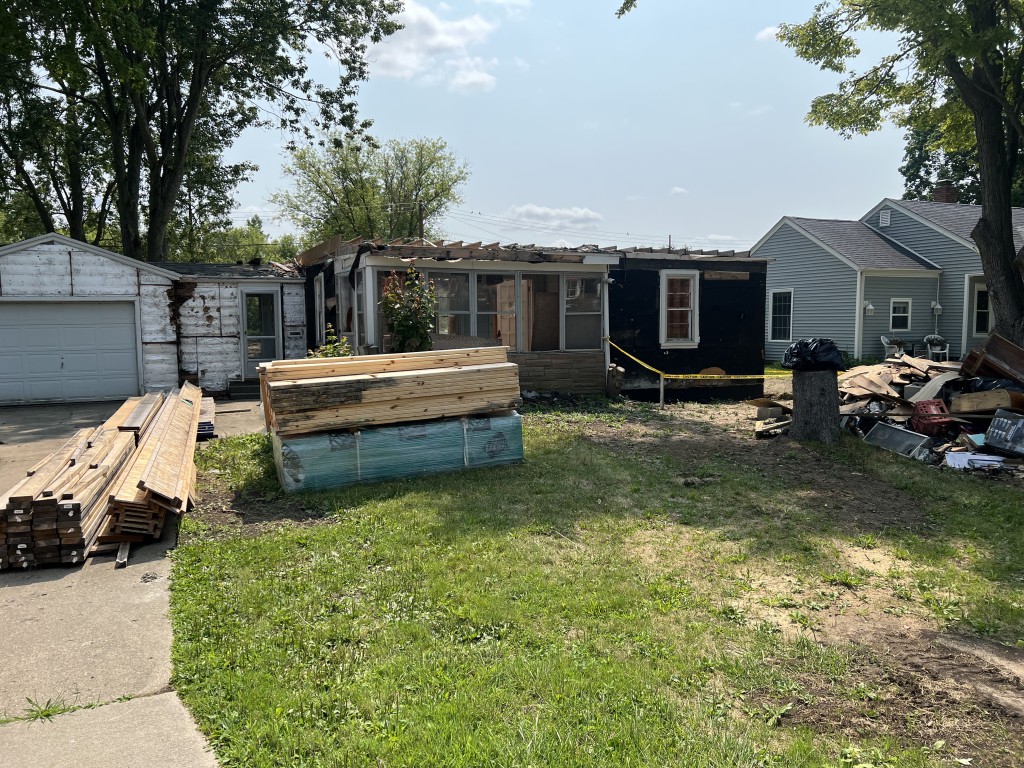
For one property on Morrell Street with trash piled on the yard, a pile of wood, and a roofless house, the city was ready to impose fines if the trash was not cleaned up.
Removing the building materials on site proved more complicated, as a building inspector must review the site and consider pulling permits to initiate construction work, former City Manager Lorrelei Natke said.
This enforcement procedure has irked some officials and residents, who say the situation has gotten out of hand and needed remedying long ago.
The Morrell Street house has been in poor condition for years, residents say, and has had unsafe conditions for several months.
“It’s the worst house in the whole city — it’s not even a house anymore,” Council member Sharon Krosnicki said at the Aug. 10 meeting. “So how about quit with the chances?”
Amidst apparent tension, the city attorney is scheduled to address council on Aug. 24 to give guidance on blight enforcement and the city’s ordinance.
Describing the issue
Yale’s city code defines blight to include abandoned automobiles, miscellaneous junk items in the yard or perpetual yard sales, building materials on a property without a building permit, structural disrepair that has existed for at least 60 days, and weeds or grass exceeding 6 inches.
Yale’s code also prohibits parking vehicles in front or side yards for more than 72 hours, and requires unlicensed vehicles to be registered within 60 days. Vehicles that are inoperative for more than 48 hours are prohibited, unless they are contained in an enclosed shelter. Parked vehicles can be on the street right-of-way or adjacent to a driveway as long as it’s within 10 feet of the traveled portion of the roadway.
Violators have 72 hours to remove violating vehicles upon notice, or are subject to impoundment and the costs.
For all other violations, city officials need only notify offenders in writing, regardless of it being a civil infraction notice or not, to trigger a five-day timeline to remedy the cause of blight.
Additional time to remove the causes of blight may be granted if progress is being made, but the city may step in and charge costs to remove it.
A few common concerns regarding blight exist. Parked vehicles could seep fluids into the ground, timber laid outside for prolonged periods can invite pests or termites, which could spread into neighboring properties.
More importantly, blighted properties negatively impact surrounding home values, and, if widespread, can create undesirable environments for new or existing businesses.
It is unclear how prevalent Yale blight is in 2026 compared to past years, though some residents say the issue has never been worse than it is now.
“The city council needs to be serious,” said Alica Rawlins, a Yale resident. “Several years ago it was a big deal — all the blight in our town.”
The council emphasized a desire to fix the issue, Rawlins said, but “that’s gone to the wayside, as far as I can see.”
Enforcement
The blight enforcement officer may, by law, inspect premises that appear to be in violation of the ordinance. Fourth Amendment rights, however, constrain some enforcement actions, authorities say.
For example, an officer may suspect a parked vehicle could be unlicensed, but officers can only approach a home’s front door to view the property, or spot it from public right-of-ways. If the vehicle is tucked against a wall or structure in a way that prohibits line of sight, the officer’s options are limited.
Enforcement measures beyond that, such as utilizing ladders, drones, or anything done to “advantage” the officer’s position technically transgresses constitutional rights.
The officer can pursue an administrative search warrant, which must clear legal steps, like contacting the city attorney for advice in pursuing one or not.
In the past 18 months, Assistant Chief Brian Dowell says the department has had 22 abandoned autos removed from properties, handled eight “blighted residences” including one that had over 20 tires on the property, and addressed 28 noxious grass and weed complaints.
He said of the usual enforcement process: “You give [people] a little time to clean it up, and as they clean it up, you encourage them and tell them what a good job they’re doing, and see if they’ll continue to do that.
“I’ve had people tell me their property isn’t blight — and I tried to explain to them that, ‘Yeah, that’s a lot of stuff there,’” he added. “It’s blight. It’s garbage. It needs to be removed.”
The police department employs one blight-enforcement officer, who both receives blight complaints from the public and surveys for blighted properties.
— Max Kappel is a Report for America corps member, covering local government and agriculture for The Yale Expositor in Yale, Michigan. Report for America places talented journalists in local newsrooms to report on under-covered issues and regions. Reach out to him at max@yaleexpositor.com with tips, or just to say hi.