Sewer connection work progresses at C. Roy’s
YALE — The team at C. Roy’s Inc. is making progress toward meeting city sewer chemical requirements. The plant’s connection to the city system still hinges on how sampling tests return and how its waste is treated.
Yale Department of Public Works Superintendent Jason Hart briefed city council on the business’s progress.
“They are doing what they have to do to get numbers into locations of what they’re allowed to discharge,” he explained.
The city’s sewer ordinance lays out specific chemical requirements users must meet to connect to the public system, including biochemical oxygen demand, total suspended solids and phosphorus.
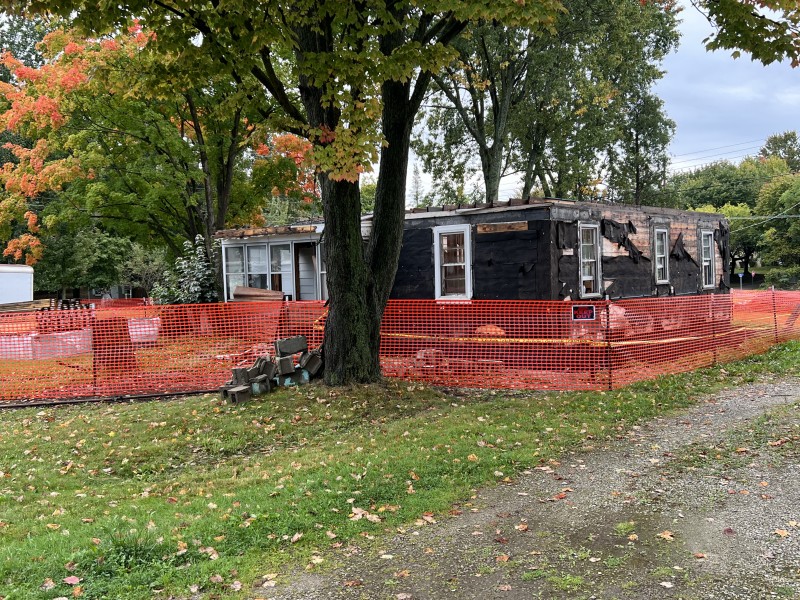
C. Roy’s in recent weeks has ceased discharging into the city system, and during an October visit to the facility, officials showed off two approved underground tanks where the business is now treating its waste.
Two previously constructed tanks in late 2025 did not meet regulatory criteria to hold C. Roy’s waste, though that issue has since been resolved with the company’s current tanks.
Waste from toilets and similar domestic waste, as well as waste from the kill floor, are separated, with renderable waste collected into barrels to be hauled off by a rendering company.
On days when it is warranted, excess renderable waste that cannot fit into C. Roy’s available barrels is collected in a trailer tank and hauled off-site by C. Roy’s staff.
For businesses like C. Roy’s industrial pretreatment programs, or IPPS, can be implemented to handle typically unpalatable waste. IPPs lay out the physical, site-specific technologies and mechanisms that can be assembled to pretreat waste that would otherwise not be permissible in a public sewer system.
The Michigan Department of Environment, Great Lakes, and Energy may recommend the implementation of an IPP to a public entity, like the city of Yale, though costs for such programs are generally covered by the industrial business, Stacey Thiel, an EGLE environmental engineer and compliance manager for industrial pretreatment programs, wrote in an August email.
Such a program was not implemented by past city wastewater supervisors. In fact, in 2019, the city — which was largely composed of different staff — told state regulators that no nondomestic waste was connected to its system.
The discovery of C. Roy’s untreated connection in 2023 directly contradicted that 2019 attestation.
— Max is a Report for America Corps member. The national organization seeks to fill news deserts and report on undercovered issues. To make a tax-deductible donation to support his work — which Report for America will match dollar for dollar — visit tinyurl.com/2s372ebu.