St. Clair County health official warns of industrial data center risks
Discussion comes amid complaints, agency turmoil
ST. CLAIR COUNTY — St. Clair County health officials warned local municipal leaders Monday, Oct. 12, that a rapid push to build data centers across Michigan could strain electrical grids, deplete drinking water aquifers, and expose residential neighborhoods to toxic exhaust and low-frequency noise.
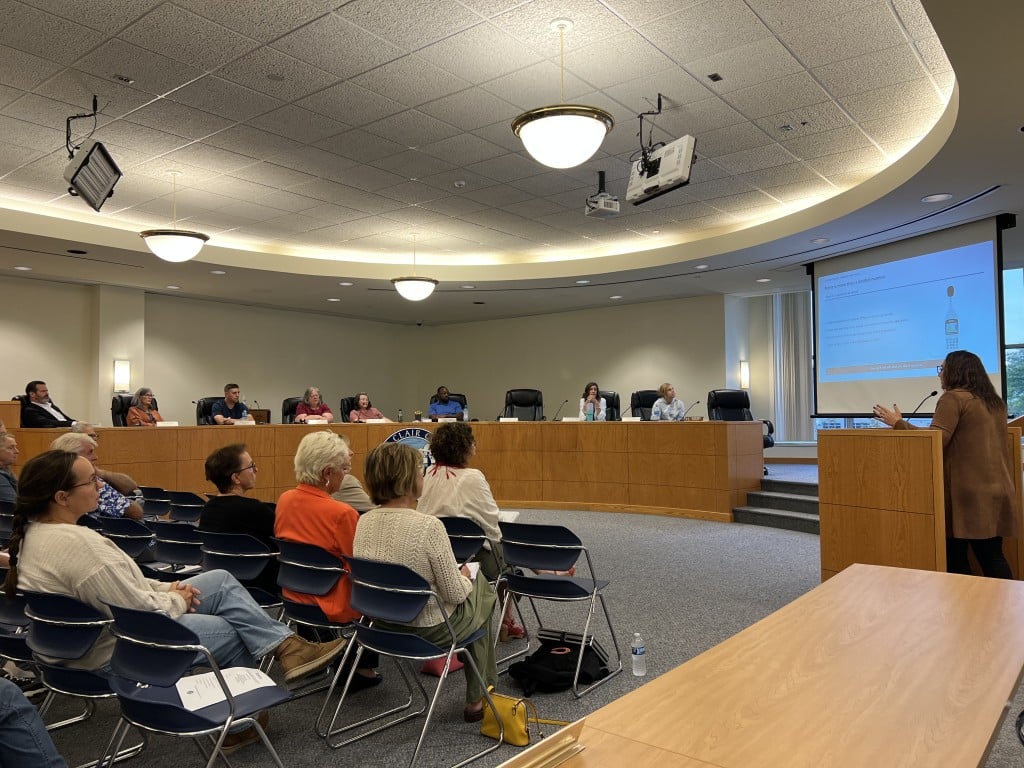
The public workshop in Port Huron, the second hosted recently by the county, focused on zoning protections and industrial hazards. Yet the presentation unfolded against the backdrop of an ongoing internal crisis within the St. Clair County Health Department itself.
Dr. Remington Nevin, the agency’s medical director, stuck strictly to industrial development during Monday’s meeting, demonstrating how planning commissions can use zoning laws to establish safeguards before developers break ground on heavy power-consuming facilities.
“Nothing I’ve said tonight should be read as a recommendation for or against any specific project that may be under consideration here in this county or adjacent counties,” Nevin said.
Power demands, groundwater threats
Nevin said that hyperscale computing sites operating continuously can draw heavily on reserve grid capacity, narrowing the safety margin available during extreme heat or cold snaps.
He said grid-connected facilities rely on dozens or hundreds of diesel backup generators, which emit pollutants and low-frequency hums during power emergencies and routine testing.
“Grid reliability is a matter of some public health input,” Nevin said.
He added that facilities using evaporative cooling systems consume hundreds of gallons of water per minute, posing potential risks to local groundwater supplies.
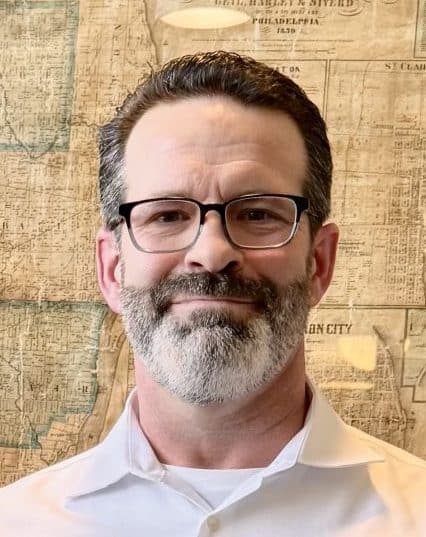
Guest speaker Kristen Meghan Kelly, who identifies as an industrial hygienist, urged local municipal boards to classify data centers as heavy industrial developments rather than commercial or light industrial operations.
“I am not against innovation, technology or artificial intelligence,” Kelly said. “I am against the reckless rollout of giant, heavy industrial infrastructure shoved into residential communities and pretending that there’s nothing wrong with that without putting the proper controls in place.”
Kelly highlighted the biological impact of continuous low-frequency hums — known as tonal noise — generated by power transformers and cooling fans.
“Tonal noise acts very crazy,” Kelly said. “It is hard to control if it is not controlled at the source. It causes your brain to try to filter out a low, steady tone, and that puts your brain in fight-or-flight mode.”
She said long-term exposure can trigger migraines, sleep disruption, elevated stress hormones and increased heart rates in pregnant women.
She also warned against deep-well water withdrawals, noting rapid pumping from local aquifers can lower water tables while pulling sediment, nitrates and heavy metals directly into private wells.
Speaker’s background, political ties
Kelly’s appearance brought a political backstory to the Port Huron workshop.
She gained public prominence in 2020 as a social media personality and anti-mask advocate during the COVID-19 pandemic before pivoting over the past year to local data center development. She previously aligned with Ottawa Impact, a conservative political group in West Michigan’s Ottawa County that sought to dismantle pandemic-era public health mandates and alter local public health priorities.
During a 2023-24 political shift in Ottawa County, Ottawa Impact attempted to appoint her husband, Nate Kelly, as its administrative health officer — initiating a yearlong legal battle with Health Officer Adeline Hambley. That effort stalled, and the faction lost its majority in late 2024, leaving OI with four seats on the 11-member board.
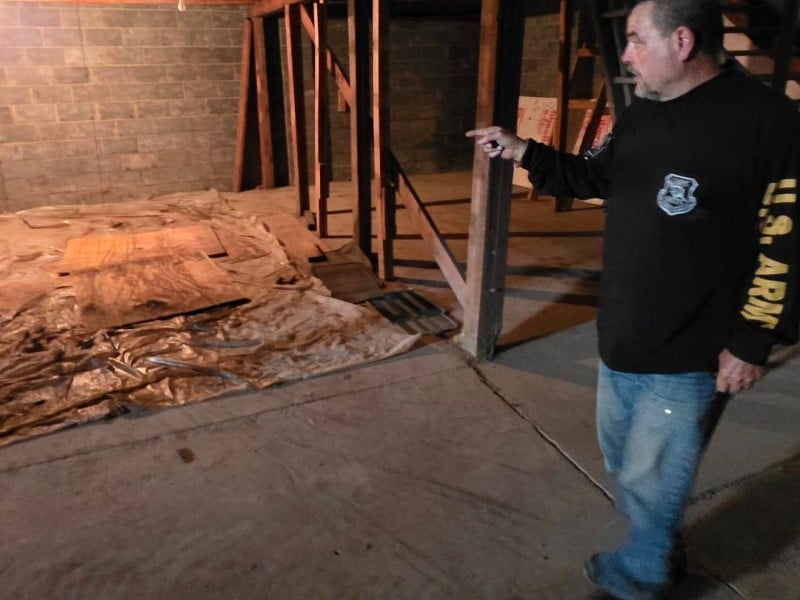
Despite claiming more than 20 years of experience as an environmental specialist and senior industrial hygienist, Meghan Kelly has no documented work history in public health. She has said she served a nine-year stint in the U.S. Air Force, then worked in the U.S. Department of Veterans Affairs healthcare system, although public records and biographical profiles do not specify the exact length of time.
Leadership friction within county health
Meanwhile, Nevin continues to navigate friction inside the St. Clair County Health Department.
Appointed in 2023, the Johns Hopkins-trained physician faces an active unfair labor practice complaint before the Michigan Employment Relations Commission.
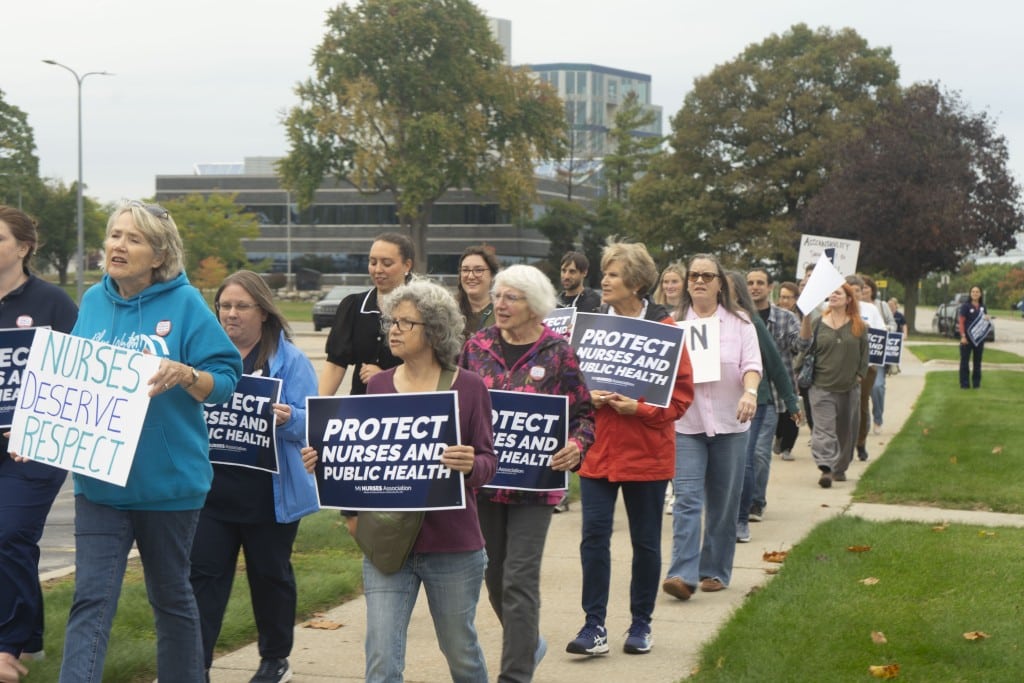
Filed in April by the Michigan Nurses Association, the complaint alleges Nevin retaliated against a staff nurse who filed an internal grievance. It follows months of staff reports alleging he engaged in gender-based discrimination, created a hostile work environment and dismantled key public health outreach programs.
Internal records and a flier distributed by St. Clair County Drain Commissioner Fred Fuller allege Nevin issued standing orders prohibiting county nurses from providing communicable disease testing or vaccines — including hepatitis C and STIs — at mobile outreach sites, halting services at soup kitchens, shelters and assisted-living facilities.
Fuller, who also previously served as Yale’s mayor, said the department also relinquished $180,000 in state grant funding for school-based health clinics in Port Huron, Algonac and Yale. Outside groups assumed operations in Port Huron and Algonac, but the clinic at Yale High School closed permanently.
Union grievances detailed allegations that Nevin spoke to female employees in a condescending manner and created an atmosphere of fear.
A November 2024 county HR investigation concluded his behavior was unsustainable long-term, and the county’s Hotline Review Committee urged commissioners to launch an independent inquiry.
County officials confirmed a formal union grievance hearing occurred March 31, and the union withdrew the complaint the following day. The state unfair labor practice charge remains pending.
St. Clair County Board Chair Steve Simasko has defended Nevin, saying off-site nursing lacked direct medical oversight under Nevin’s license, prompting a shift toward a centralized model at the main Port Huron facility alongside hospital networks and private providers.
Simasko also dismissed workplace complaints, noting no formal allegations have been sustained and that the initial HR investigation relied on anonymous reports without giving Nevin a chance to respond.
Simasko and commissioners are considering merging the health department’s top administrative and medical leadership positions into a single role — a structural shift that could expand Nevin’s authority.
Local officials seek guidance
At Monday’s meeting, local residents and township officials expressed concern over whether small municipal governments have the resources to regulate major technology firms.
Jay Hampton, a resident who spent 45 years building industrial automotive plants, warned that rapid changes in processing hardware could make massive facilities obsolete.
“These data centers are going to be lucky to have a five-year life,” Hampton said. “Buildings aren’t going to last.”
Meghan Kelly said data centers should strictly be classified as heavy industrial, and the county should update noise ordinances to cover low-frequency sound and mandate financial escrow accounts to cover future decommissioning costs.
“If you put these safeguards in place, they won’t even stop here,” she said. “The power is in the local body.”
Nevin said the health department will consolidate presentation materials and public comments into a guidance packet for the November Advisory Board of Health meeting.